
_
Our story starts when two guys Steve and Nigel met up in the middle to late 1970’s. They both shared the same ‘Ed’ as shortened middle names, hence the name “TedBoys“. One of the Teds wanted to build a home studio in a dilapidated Edwardian house whilst the other helped knocking out the walls between two bedrooms. The Studio was named after a very noisy and demanding white cockatoo Parrot
Parrot Studios
This is the Home Studio they used in Neasden UK, utilising mainly
- 24T Mixing Desk
- 4T Teac x 2
- Synchroniser
- Ferrograph Series 7
- Fostex B16
The huge 15in Tannoys we used didn’t impress the neighbours though!
So, Ted Nigel had been busy playing in a semi-professional band called System as a drummer with his friends Ian, Adrian, Hokey and Spike, which had gained the interest of writers Ronnie Scott and Steve Wolfe, who hoped to pitch them to producer Micky Most as a replacement for the band Mud. Although they secured a recording session, technical issues with the drum sound led to its cancellation. Ultimately, System’s chance at fame ended, as Scott and Wolfe focused on more promising artists, including Bonnie Tyler.
Ted, Steve on the other hand was the lead singer of Hustler, a professional band signed to A&M in the 70’s supporting tours with the likes of Queen and Status Quo. After Hustler broke up, he was the guy checking in the bands at Manticore, (a rehearsal space owned by ELP, where many popular bands of the time practiced). Nigel would often drive straight from work to listen to some of these super stars. On one occasion they were introduced to Elkie Brooks and on another Nigel was subject to a target practice when playing in goal pinned against the back wall of Manticore with Led Zeppelin practising penalty shoot-outs, egged on by an amused Steve
Steve was working on writing a catalog of songs to enable him to go it alone choosing his own music and songwriting partners. He received multiple solo record contract offers and was even invited to join Manfred Mann’s Earth Band but in the end chose to be launched as a solo artist making several singles with John Schroeder’s Black Bear andHarbour Record labels. For this project, Steve as The Steve Haynes Band collaborated with Nigel in the writing, arranging and playing keyboards in some of the studio recording sessions. Nigel was wondering if he was not out of his depth playing with top professionals, nevertheless he ended up playing the prestigious Steinway grand piano at Morgan Studios in the UK. Eventually in 1979 the run of singles (including Walk on By, Picture Puzzle, B side I get so Lonely and If this isn’t Love) and on cover versions Save Me, Save Me and Back In My Arms Again, ended without making the desired headway.
Not being deterred, they both briefly joined rehearsals for a tour with Pete Gage’s “The Ram Jam Band” (without Geno). Steve fronted the band as lead vocals whilst Nigel, initially just a sound engineer, took over as organist after Bernie Clark suddenly left to join Ringo Starr for some project he was doing. The Ram Jam Band at that time engaged the services of Mel Gaynor (the Simple Minds drummer on “Don’t You Forget About Me” ), Raphael Ravenscroft was on Sax (famous for the saxophone riff on Gerry Rafferty’s song “Baker Street”), Annie Whitehead was the glamorous trombone player, Luke Tunney was on the trumpet, Durban Laverde and sometimes Jimmy Exell were playing bass. Occasionally others substituted. The band gigged in the London area and to a University in Wales. A lift in Pete’s Citroën DS estate turned rather dramatic when a front tire sped past them at over 100 mph on the motorway, still, after a quick detour to Andrew Fairweather Low for tea, they happily continued their journey, eventually reaching the legendary Rockfield Music Studios, where the Tedboys contributed to recording The Ram Jam Band’s single, FreeTown Part 2 & 3.. The gigs in London were memorable, especially when the icon Marvin Gaye came to one of the Ram Jam’s gig at The Greyhound in Fulham). Some of the band members were not warned so were in awe when spotting him in the audience and grew nervous as he stayed until the end, anticipating a possible meeting.
The bass player Jimmy offered out a greeting hand as Marvin climbed the podium steps but Marvin totally ignored Jimmy and shook the hand of Pete Gage who was standing right behind him. It was like watching a sketch from the two Ronnies! Marvin, now on stage, asked for a cigarette. Jimmy was so excited to be able to oblige he rushed a packet of fags from his pocket only to spill them out all over the stage floor. Back stage the smoking began with no matches being required. It was explained later that Marvin wanted to check out Steve’s soulful vocals and apparently explore the possibility of using the band as his opening act, but we don’t think the band was ever chosen! The Ram Jam Band (no doubt in different disguises) still continues and it seems now back with Geno Washington at the time of this writing.
While on tour, Steve was being considered by Chrysalis Records as a solo artist, alongside Paul Young.
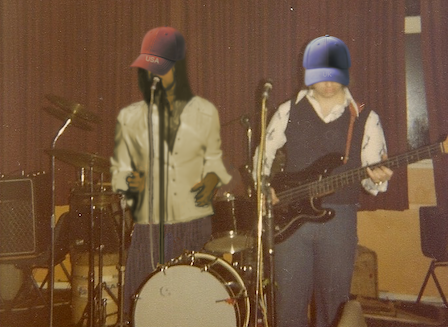
During all this excitement the TedBoys kept on writing, demoing songs and gigging in clubs.
After the Ram Jam tour finished, in 1981, the TedBoys found themselves in S.A.V. studios London working on an album forBill Knight. Later on Steve continued with his own band (The Steve Haynes Band) with Nigel. The band gained a good support and played regularly with a weekly residency at The Brook House, Hayes pub. Steve’s connections were vital here as often band members were popping in and out as paid sessions and tours took them away from these gigs whilst some would simply turn up at Steve’s flat to put down a track or two. Notably:- Richard Blanchard (Kim Wild’s Sax) and Roger Willis (of Capability Brown) vocalist and drummer. During this time they both continued with their writing and Steve came up with a song called “Tears On My Pillow” which ended up on an album track for Tony Christie, Steve also put out this track as a single in his own name whilst Nigel was involved on the B side.
Being inspired by the ‘Hustler Reloaded‘ project, which was the brainchild of the Hustler bass player Ken Lyons, Nigel created the artist Tedboys to showcase Steve’s unique sound and versatility, luckily in most cases, finding Steve’s vocals on a separate track. Nearly all of the backing tracks that Nigel had previously played on, in real time on the TEAC 4 track, could not do justice to the emotional expression of Steve’s vocals. Consequently he re-recorded the backing instrumentation, rearranged, remixed them, and finally remastering resulting in the production of this album: – ‘Tibetan Gems‘, by TedBoys
Head over to Hustlerrock.com …..
Steve on Lead Vocals
The journey from analogue to digital
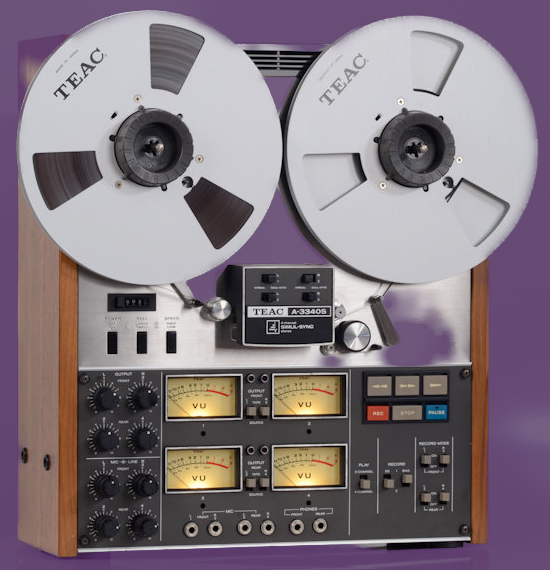
Master TEAC
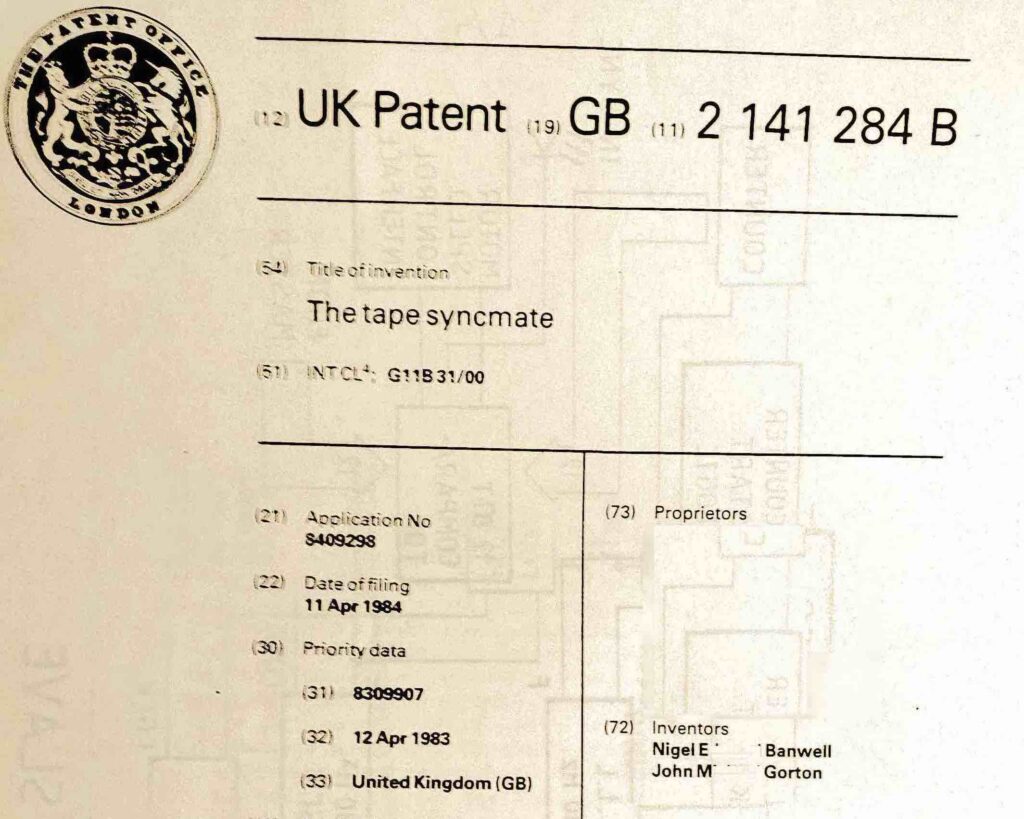
SyncMate
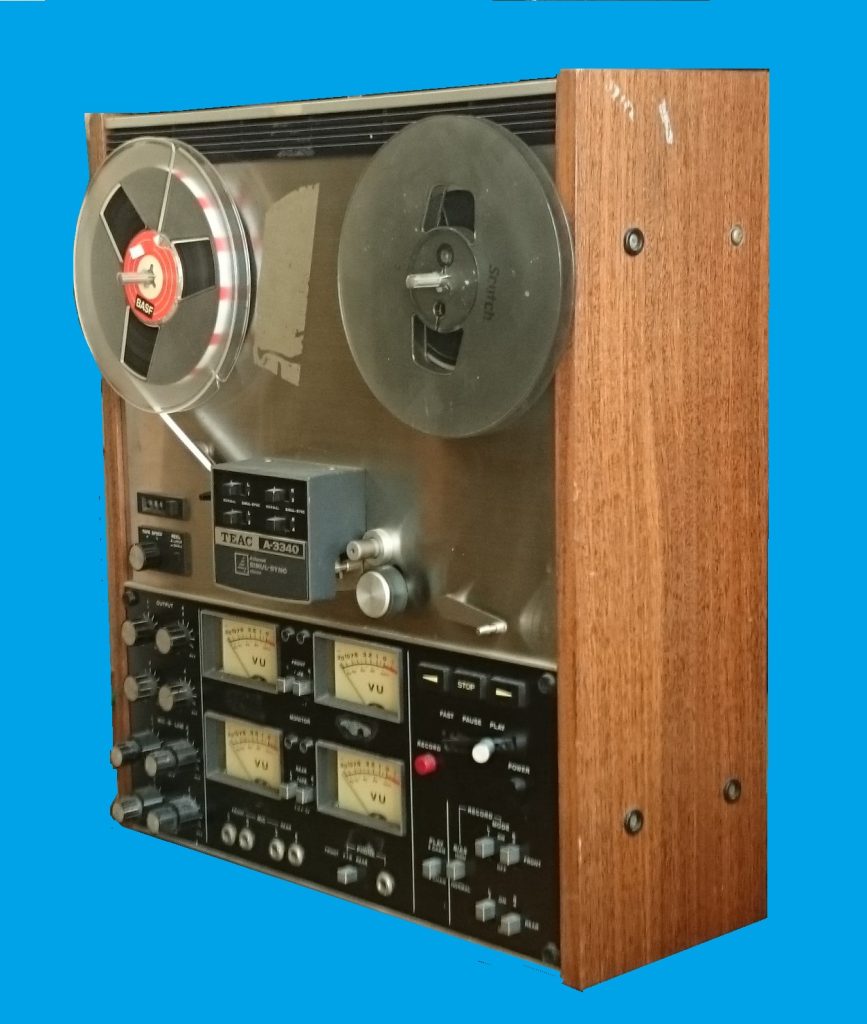
Slave Teac 3340
1970s bought from “Mitch” Mitchell
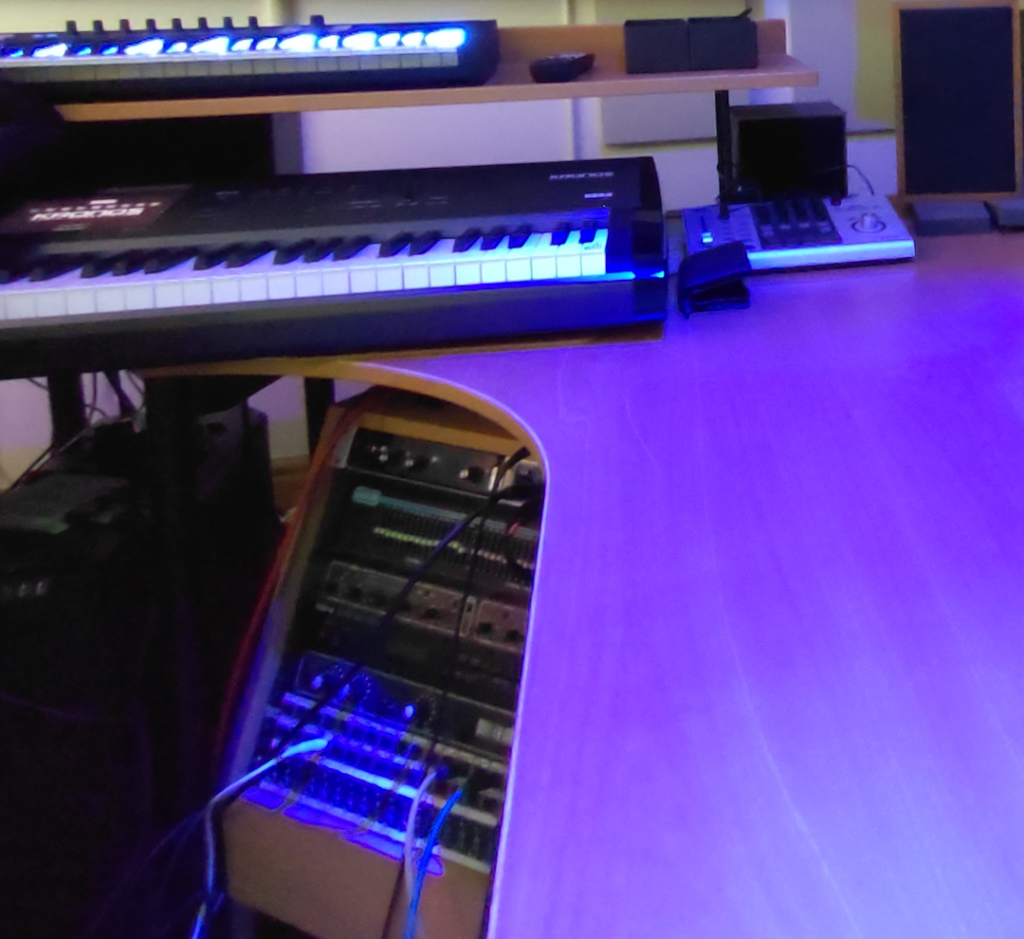
Cubase DAW
Windows PC
Master TEAC
A typical scenario would be a mixed backing track provided by Nigel on one of the 4 tracks in mono with a special timecode. Steve who would then sing along adding Lyrics, harmonies and guitar
Bespoke Synchroniser
Using a synchroniser (designed by Nigel and his work mate John), the special timecode allowed them to combine two 4 track TEAC tape recorders gave 8 analogue tracks. The design was patented and the prototype device was later lent to Ashley Ingram from the band Imagination to give them 32 tracks syncing their two 16 track Foxtex. Lucky them! (Nigel later saved up for one himself)
Slave TEAC
The 3340 Teac motors were AC controlled, so a special speed control would change the frequency of the capstan motor of the slaved machine, which was controlled by the SyncMate. Some of the tracks were then later separated onto a B16 and finally Mixed on a 24Track Alan & Heath System 8 Mixing console.
DAW on a computer, Keyboards and internet
Having Invested in a Digital Work Station (DAW), provided access to virtual instruments and mastering software. Together with on-line distributers allows the tracks to escape into the digital world!